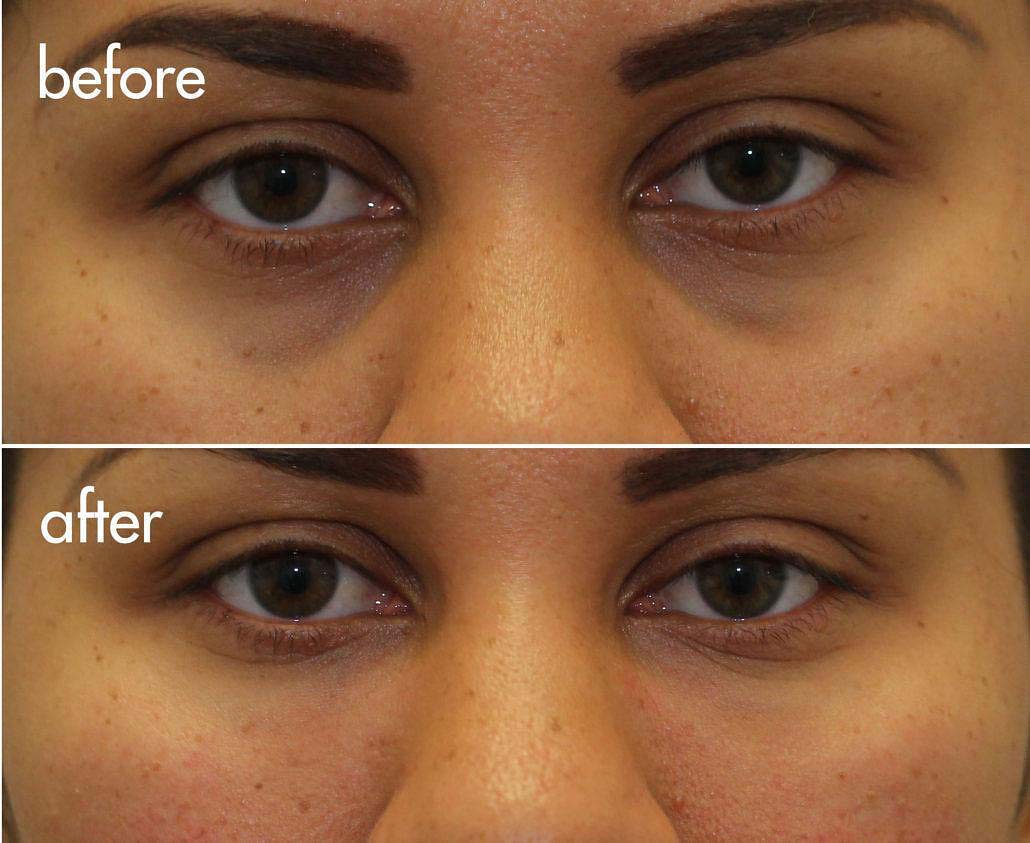
You‘re reading this because you’re wondering if under eye fillers are going to be the fix you’ve been looking for to correct your under eye dark circles and bags. And you want to know if they are safe and if they really work.
The short answer is yes. Under eye filler works.
But, there are some very very important caveats. For that reason, read on for the more nuanced answer and for a description of a test that you can do at home to predict if fillers will work for your dark eye circles.
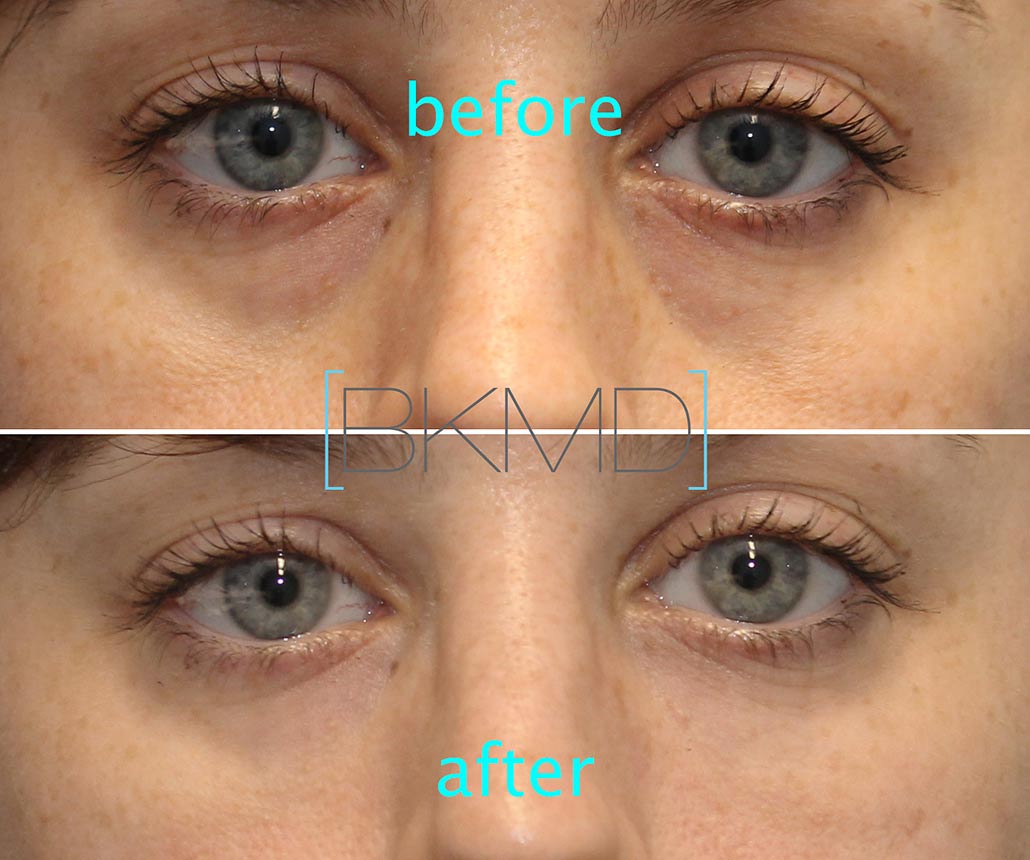
The under eye area is where you start to see dark circles and eye bags, especially if you’re tired or not getting enough sleep. And there are some of us who have these problems even if we aren’t tired. In many cases, the most effective way to fix or improve the dark circle issue is with under eye fillers.
The first important thing to consider is why you have a dark circle or a bag. I’ve explained the causes of dark under eye circles in an infographic, here. Or you can watch this video:
Once you know why you have dark under eye circles the next question is what can you do about them?
There are 3 major ways to fix these:
The next important question is, “Will under eye filler work for me?”
The answer depends on several factors. If you can answer yes to the following questions, there is a very good chance that you’re a suitable candidate for under eye fillers:
What is the “thumb displacement test”?
This is a self-test you can do at home to see if you have a tight attachment under the tear trough that would prevent fillers from being able to lift up this groove under the eye that is creating a shadow.
The hollow area under the eye where the shadows live is covered by muscle and skin (but usually not much fat). If the muscle and skin in this area is tethered down to the bone with a tight ligament (this is often called the orbitomalar ligament or the orbital retaining ligament but technically it’s the sub-orbicularis muscle fascia) then filler won’t give you a good smoothing effect. In fact too much filler in the setting of a tight ligament can cause the look of puffiness, a visible roll of filler, or just an unnatural look.
This test helps to predict what fillers will do for your under eyes. It can show you if fillers will give a partial improvement, say 50% better, or closer to a full improvement.
Watch this video to learn how to do this test on yourself:
So once you’ve determined that you could be a good candidate for under-eye filler, what’s the best way to get the treatment?
On average in my NYC office I perform between 40 and 80 eye filler treatments each month and I’ve been doing this for many years. Based on my extensive experience, I have developed my own strategies that are safe and effective. And in some cases I tell clients that they are not perfect candidates and I offer surgery instead. If you won’t see at least 50% improvement then it may be best to consider other treatment options.
And because I offer both surgery and non-surgical options I am not biased toward one treatment or another. My goal is to offer the most appropriate option.
I almost always use a blunt cannula (at least a 25 gauge thickness) to do this treatment and I don’t use extra thin cannulas (27 gauge or thinner) which can bend and can still be sharp at the tip (even though they are still called “blunt”).
I don’t use runny or too-thin fillers (like Belotero Balance), fillers that are notorious for attracting excessive amounts of fluid (like Juvederm generation 1 products), permanent fillers (like Radiesse and Bellafill) or fillers that predispose you to inflammatory lumps (like second generation Juvederm prodcuts).
I don’t put a lot of filler very close to the surface that can look like an under-eye bubble.
For more information on under eye fillers, you can listen to this podcast episode I did on the cannula eye lift, this post on choosing between under eye filler and blepharoplasty surgery, and this page with lots of under-eye filler before and after images.